
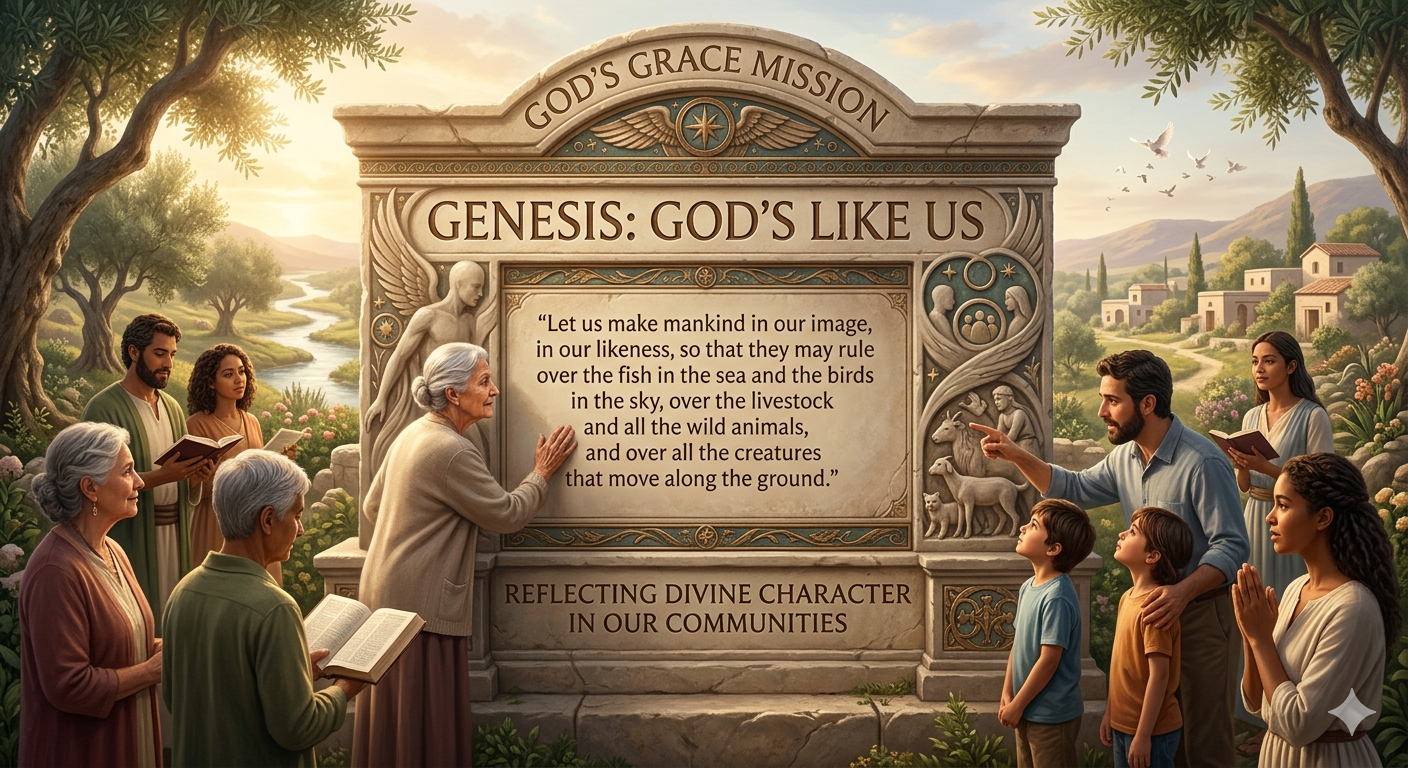
The phrase “Let us make mankind in our image, after our likeness” (Genesis 1:26) is one of the most debated and fascinating lines in the Bible. It shifts the language from the singular “I” to a communal “Us,” which carries several deep theological meanings.
Here is a breakdown of why God uses plural language and what “like us” actually implies:
1. The Divine Council (The Heavenly Court)
In the ancient Near Eastern context, kings often consulted a “council” of advisors. Many scholars suggest this verse depicts God speaking to His heavenly host (angels and celestial beings). While the angels didn’t help create (the next verse says “God created” in the singular), He was announcing His crowning achievement to the heavenly court.
2. The Holy Trinity
For many Christians, this is the first “whisper” of the Trinity in the Bible. It suggests a conversation within the Godhead—the Father, Son, and Holy Spirit. Since God is inherently relational and communal, it makes sense that humans (made in His image) are also social beings who thrive in relationship with others.
3. The “Plural of Majesty”
Just as a modern monarch might use the “Royal We” (e.g., “We are not amused”), some linguists argue that the Hebrew word for God (Elohim) and the plural verbs are used to denote absolute greatness, fullness, and majesty rather than a numerical count.
What does it mean to be “Like Him”?
The text doesn’t mean we are “little gods” in power, but rather “like Him” in specific capacities:
- Rationality: The ability to think, reason, and create.
- Morality: Having a conscience and an understanding of justice and holiness.
- Relationality: The capacity to love and be loved.
- Sovereignty: Just as God is the King of the Universe, He gave humans “dominion” to act as His representatives (stewards) on Earth.
The Contrast with Genesis 3
It is worth noting the irony in the Garden of Eden. The serpent tempted Eve by saying, “You will be like God, knowing good and evil” (Genesis 3:5).
The tragedy was that they were already like God by design. The temptation was to be like God without God—to seize independence rather than embrace the image they were already given.
Reflections: If we are made to be “like” a communal, loving Creator, how does that change the way we treat the people around us today?